Tooling & Mould Making
Production tooling is cut from the data behind your approved prototype. Everything downstream inherits whatever the tool does, which is why dimensional accuracy is secured or lost here.
From approved data to production tooling.
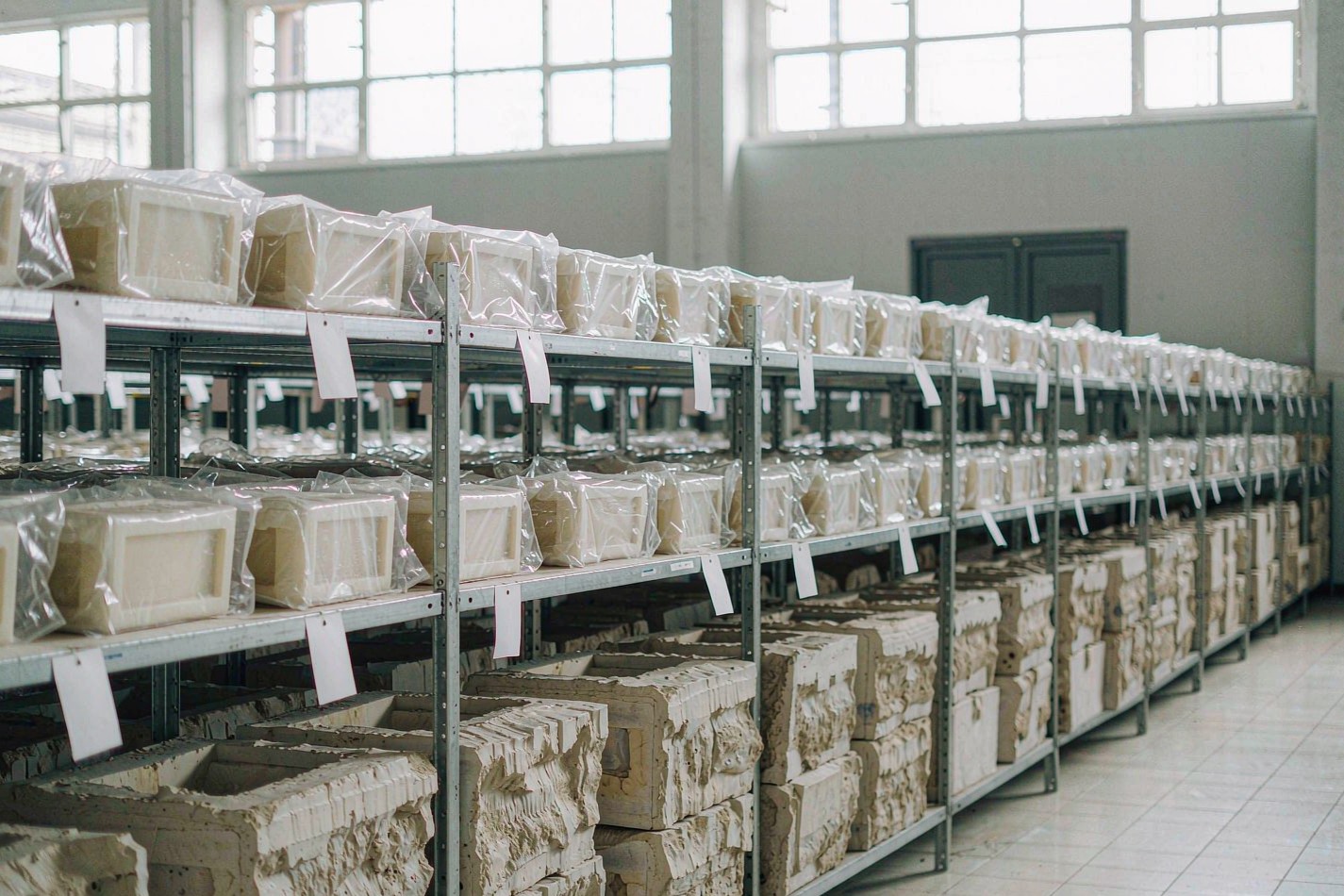
Your prototype proves the design works. Tooling has to prove it can be repeated. That means working backwards from the approved piece and solving for the problems a single sample never exposes: where the parts split, how the material releases, where the piece will move as it cools and cures.
Parting lines are placed where they can be cleaned without disturbing the sculpt. Draft angles are checked against the material, not against a drawing. Shrinkage is compensated in the tool, so the piece comes out at the size you approved rather than the size the material wants.
What this stage protects.
| Risk | What we do about it |
|---|---|
| Visible seam across a face or a logo | Parting lines placed on natural breaks in the sculpt |
| Pieces that will not release cleanly | Draft checked before the tool is cut, not after |
| Every piece slightly smaller than approved | Shrinkage compensated in the tool itself |
| Detail softening over a long run | Tool condition monitored across the run, not only at the start |
A tool is not permanent.
For long runs we plan the tooling around the quantity. Where an edition is large enough to require more than one tool, those tools are made to produce interchangeable output.
A collector who receives number 12 and a collector who receives number 2,900 should not be able to tell which tool made which.
What we need from you.
Three things determine how the tooling is planned. Nothing else changes the plan.
- Approved 3D data
- Or a physical prototype we can work from.
- Target quantity
- This determines how the tooling is planned.
- Seam-sensitive features
- Any feature that must not be interrupted by a seam.
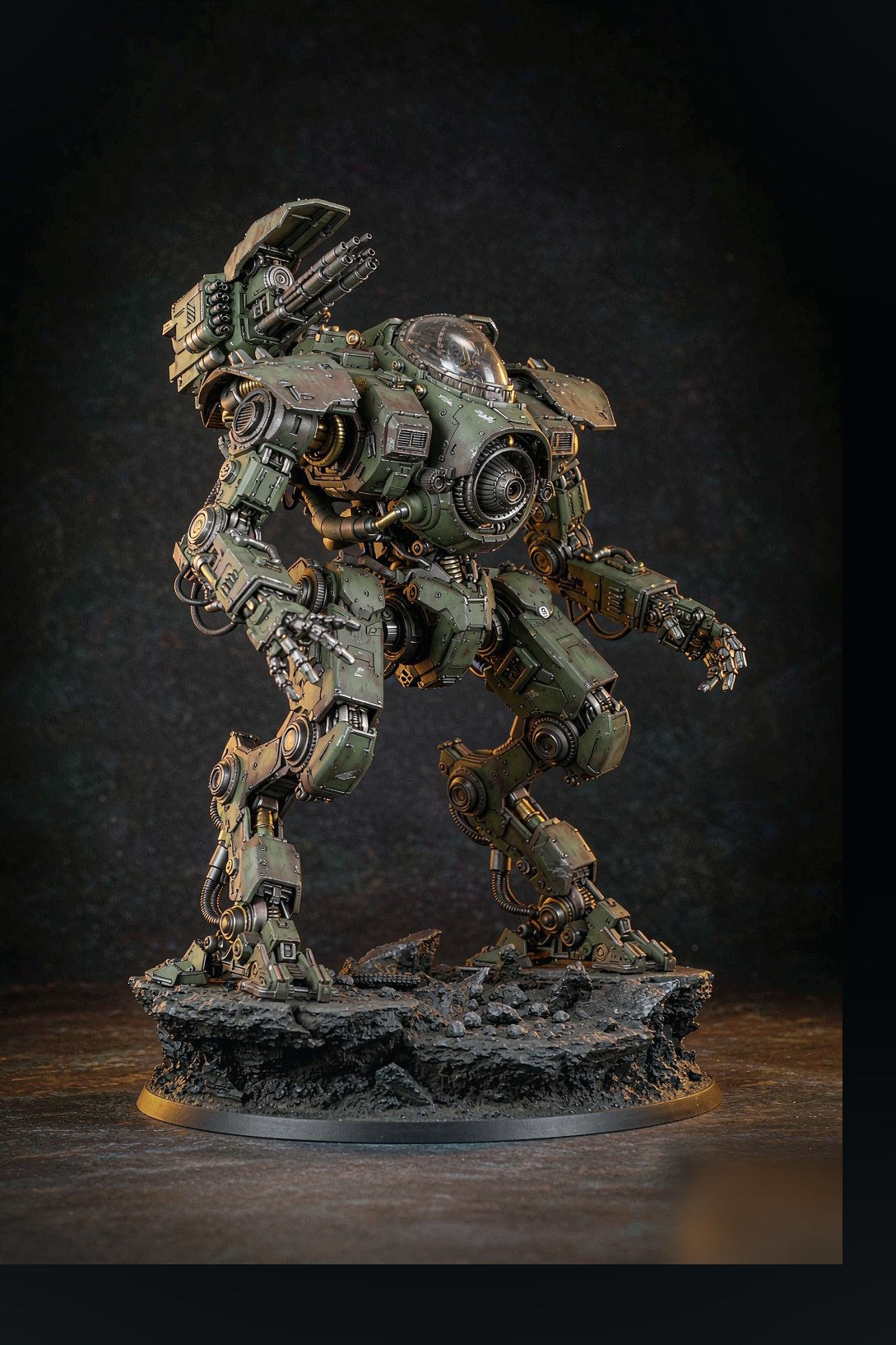
Every piece starts with the tool.
Send us the approved data or the prototype. We will come back with the tooling plan, the parting-line and draft calls, and what the run needs from your side.