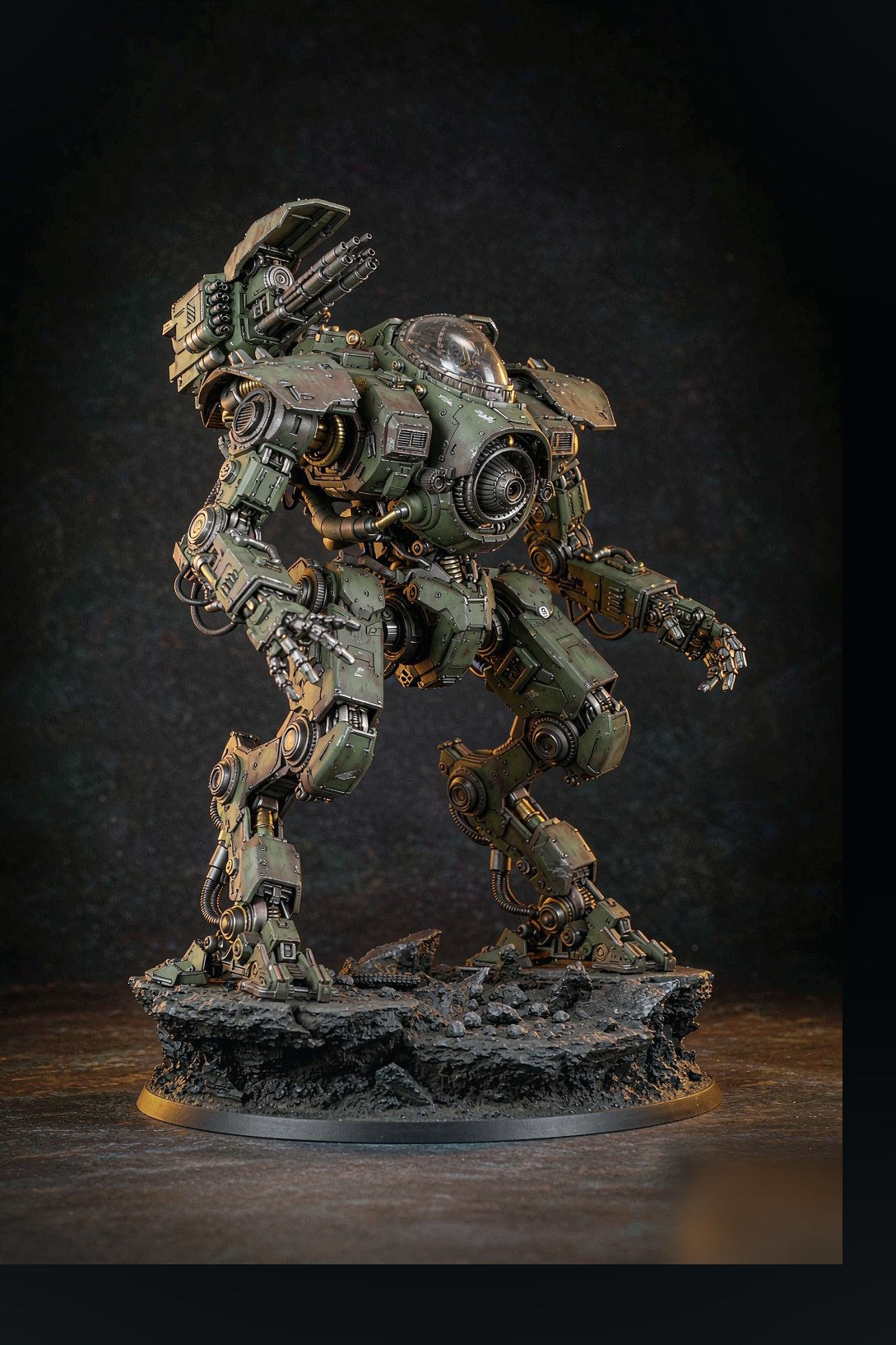
A limited edition makes a promise. The number on the base says this object is one of a known few, and the collector pays for that as much as for the sculpt. Everything in this article is about whether the promise holds up when someone checks it.
What makes a number credible
An edition number is only worth something if it can be verified. That requires three things, and all three are decided before production:
A defined total, fixed before production starts. An edition size announced as 500 and quietly extended is worse than an edition of 2,000 announced honestly. Collectors track this, and a revised edition size damages a brand permanently in a way that a large edition never does.
A record that maps numbers to batches. Numbering is not decoration applied at the end. Each number should correspond to a production batch with its inspection record. That mapping is what makes the claim checkable, and it doubles as a traceability mechanism for the entire run.
A single authority for issuing numbers. Numbers issued from more than one place produce duplicates. Duplicates are the failure mode that turns a limited edition into a liability, and they usually surface years later on the secondary market.
The edition size is a public claim, not a quantity
Announcing an edition size is a statement about scarcity, and it is read as one — by buyers, and by resellers years later. That reading creates obligations an open run does not have:
- The announced number should be the number. If a run is planned at 500 and demand exceeds it, the defensible answer is a second edition, separately identified — not a quiet extension of the first. Collectors accept a small edition selling out; they do not forgive one that grew.
- "No reprint" has to be published to mean anything. A promise not to repeat an edition is worth exactly what has been written down publicly and permanently. Said at a launch or in a message, it is unverifiable within a couple of years and cannot be relied on by anyone who buys later.
- The certificate is the object's identity document. A piece separated from its certificate loses the link to the edition it belongs to, and that link is a substantial part of what was paid for. Alone among the usual conditions on a collectible, a missing certificate reduces what a piece is worth rather than merely discounting it.
- The claim and the evidence have to agree. The number is what a buyer reads first; the certificate and the batch record are what make it true. An edition that can only produce the first is a marketing exercise, and the secondary market is where that gets discovered.
Decisions to fix early
These are all cheap before tooling and awkward after:
- Edition size, and whether it is global or split by region
- Number format — the 500th piece of 500, or 001/500, or an engraved plate; the format should be legible when the piece is displayed
- Visibility of the number — under the base, on a plate, or hidden. Collectors often want to see it without dismantling the piece, and appraisers want it accessible
- Artist proofs or extras — whether they exist, how many, and how they are marked. Unmarked extras are indistinguishable from overruns
- Whether variants are separate editions — a recolour is not automatically the same edition, and the answer should be stated, not assumed
- The certificate of authenticity — what it states, and how it relates to the number on the piece
Packaging is two products, not one
The most common packaging mistake is treating the box as one object. It is two, with opposite requirements:
| Shipping carton | Display box | |
|---|---|---|
| Job | Survive transport | Survive the shelf and the collection |
| Priority | Structure, cushioning, stackability | Finish, print quality, unboxing |
| Handling expectation | May be discarded | Kept for the life of the collection |
Designing them as one object produces a box that is either too expensive to ship in or too plain to keep.
Why the box is designed before the mould is cut
This is counter-intuitive and it is where real money gets lost. The piece and the packaging have to fit each other, and the packaging has constraints the sculpt does not know about:
- Protruding elements — weapon tips, wings, hair, antennae — determine insert geometry and are the first things to break
- Base footprint and total height set the carton's internal dimensions, which set the outer dimensions, which set freight class
- Contact points — foam roughness against a newly finished surface is a real defect source, and the insert design decides where contact happens
- Display and retail constraints — shelf height, window visibility, whether the box can be shelved without opening
If the sculpt is finalised before the packaging is specified, the design either gets cut down to fit, or the packaging becomes a bespoke structure. Both are avoidable.
What collectors actually check
Having seen how this plays out, the pattern is consistent. Collectors verify:
- that the number on the piece matches the certificate
- that the edition size printed on the packaging matches the one announced
- that the number is visible without disassembly
- that the display box keeps the piece safe for storage, not just for the first opening
- that nothing has been glued, taped or pressed into the finish
- that the piece can be returned to the box without a struggle
That last one is underestimated. A box that is difficult to repack gets discarded, and once the box is gone the piece loses part of its secondary-market value.
Failures to avoid
- Numbering assigned at the end of the run, with no batch record — the path to duplicates
- Edition size revised after launch, which poisons every previous claim
- Packaging specified after the form is frozen, creating either a cut-down sculpt or an expensive insert project
- Insert materials that contact the finished surface directly, producing rub marks that only appear after transit
- No certificate, or a certificate that restates the number without identifying the batch or the piece
- Unmarked extras, which make the edition size legally true and practically meaningless
What to settle before production
- the edition size, in writing, and whether it can change
- the numbering format, the placement, and the issuing authority
- the relationship between the number, the batch record and the certificate
- whether artist proofs or variants exist, and how they are marked
- the two packaging roles, specified separately
- internal carton dimensions derived from the finished assembly, not from the sculpt alone
- the insert material and every point where it touches the finished surface
None of these are difficult. All of them are cheap now and expensive later.