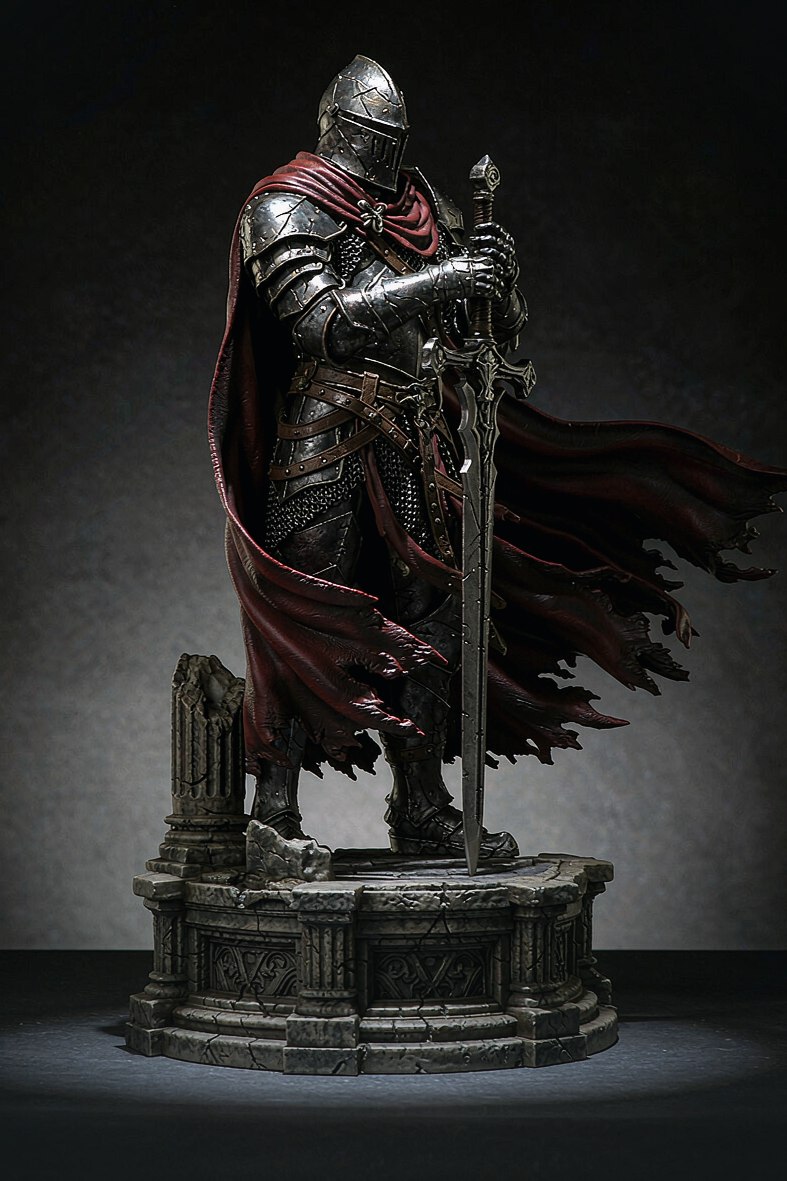
One question decides most of your US import paperwork before anything is tested: is this product a children's product?
Get it wrong in either direction and the cost is not cosmetic. Call a children's product a general-use item and your certificate will not be accepted. Call an adult collectible a children's product and you have signed up for third-party testing, a certified laboratory and a certificate category your buyer cannot use.
So the question is worth answering precisely.
The legal definition is narrower than most people assume
Under the Consumer Product Safety Act, a children's product is a consumer product designed or intended primarily for children 12 years of age or younger (15 U.S.C. § 2052(a)(2), implemented at 16 CFR § 1200.2). The operative words are designed or intended primarily. Age labels alone do not settle it, and neither does the manufacturer's own claim.
The regulation sets out four statutory factors, considered together as a whole — not as a checklist you can win on points:
- A statement by the manufacturer about the product's intended use, including a label, if that statement is reasonable.
- Whether the product is represented in its packaging, display, promotion or advertising as appropriate for children 12 or younger.
- Whether the product is commonly recognized by consumers as intended for use by a child 12 or younger.
- The CPSC staff Age Determination Guidelines published in September 2002, and any successor to them.
CPSC is explicit that these call for a case-by-case determination based on facts unique to the product. There is no formula that converts a spec sheet into an answer.
Where collectibles are addressed directly
The same regulation carries a specific example for collectibles at 16 CFR § 1200.2(d)(2). It states that adult collectibles may be distinguished from children's collectibles by:
themes that are inappropriate for children 12 years of age or younger, features that preclude use by children during play — such as high cost, limited production, fragile features, and display features (such as hooks or pedestals) — and by not being marketed alongside children's products in ways that make them indistinguishable from children's products.
Read that list again, because it is the most useful paragraph in this article. The features that make a collectible desirable to a collector are the same features the regulation uses to separate it from a child's item. Limited production. Fragility as a deliberate property. A display base rather than a handle.
A second provision points the same way. At 16 CFR § 1200.2(d)(1), decorative items intended only for display, with which children are not likely to interact, are generally not considered children's products. A statue on a pedestal is display by construction — it is not held, and it is not played with.
One honest caveat: cost is a consideration, not a verdict. In adopting this rule, CPSC responded to comment that not all collectibles are high cost, and confirmed that cost is simply one among several considerations. A low-cost collectible is not automatically a children's product — and a high-cost one is not automatically exempt.
The two paths, and why the difference is large
| Children's product | General use / adult collectible | |
|---|---|---|
| Certificate | CPC — Children's Product Certificate | GCC — General Certificate of Conformity |
| Who may issue it | The manufacturer or private labeler | The US manufacturer or importer |
| Testing | Third-party testing by a CPSC-accepted laboratory | No CPSC-accepted laboratory required; may rest on a reasonable testing program |
| Safety standard | ASTM F963 and the applicable children's product safety rules | The applicable CPSC-enforced rules for the category |
| Tracking label | Required, with specific content | Basic requirements |
The single most common error we see is at the second row. For an imported product, the GCC is issued by the US importer under 16 CFR Part 1110 — not by the overseas factory, and not by a testing laboratory, which supplies test reports and does not carry certificate responsibility. An offer to "issue your certificate for you" from the manufacturing side is not a shortcut. It is a document that will not survive scrutiny.
Our role on that path is stated plainly: we produce test data and records structured so that your importer can issue the certificate. Not more, and not less.
What quietly pulls a collectible back toward the other reading
In our experience, three things do more damage than any specification:
- Play value. Articulated joints, interchangeable hands or heads, accessories meant to be swapped. This is the one place where an adult collectible can genuinely drift into the other category, because interaction is the behaviour the definition turns on.
- Marketing context. A collectible sold in a children's department, or presented next to children's products, is described in the regulation itself as indistinguishable. Placement is evidence.
- Website and packaging language. Age grading, imagery and product copy are all part of factor two. They are not marketing garnish; they are facts that get read.
Where we stand
We produce adult collectibles, graded 14 and over — limited editions, individually numbered, with display bases rather than play features. The line is produced in Huicheng District, Huizhou, Guangdong, and is not distributed through children's channels.
We do not tell you which certificate you need, and we do not issue one. What we do is hold the documents you will be asked for — material and coating test data, component and surface records, production and batch traceability — in a form your importer can use directly.
If you are working backwards from a launch date, the useful first step is to settle this question before tooling, not after. The answer changes what has to be tested, by whom, and how early.
This article describes the regulatory framework, not a legal opinion. Determinations are made case by case, and rules change. Confirm your classification with a qualified testing body or compliance adviser before you file.