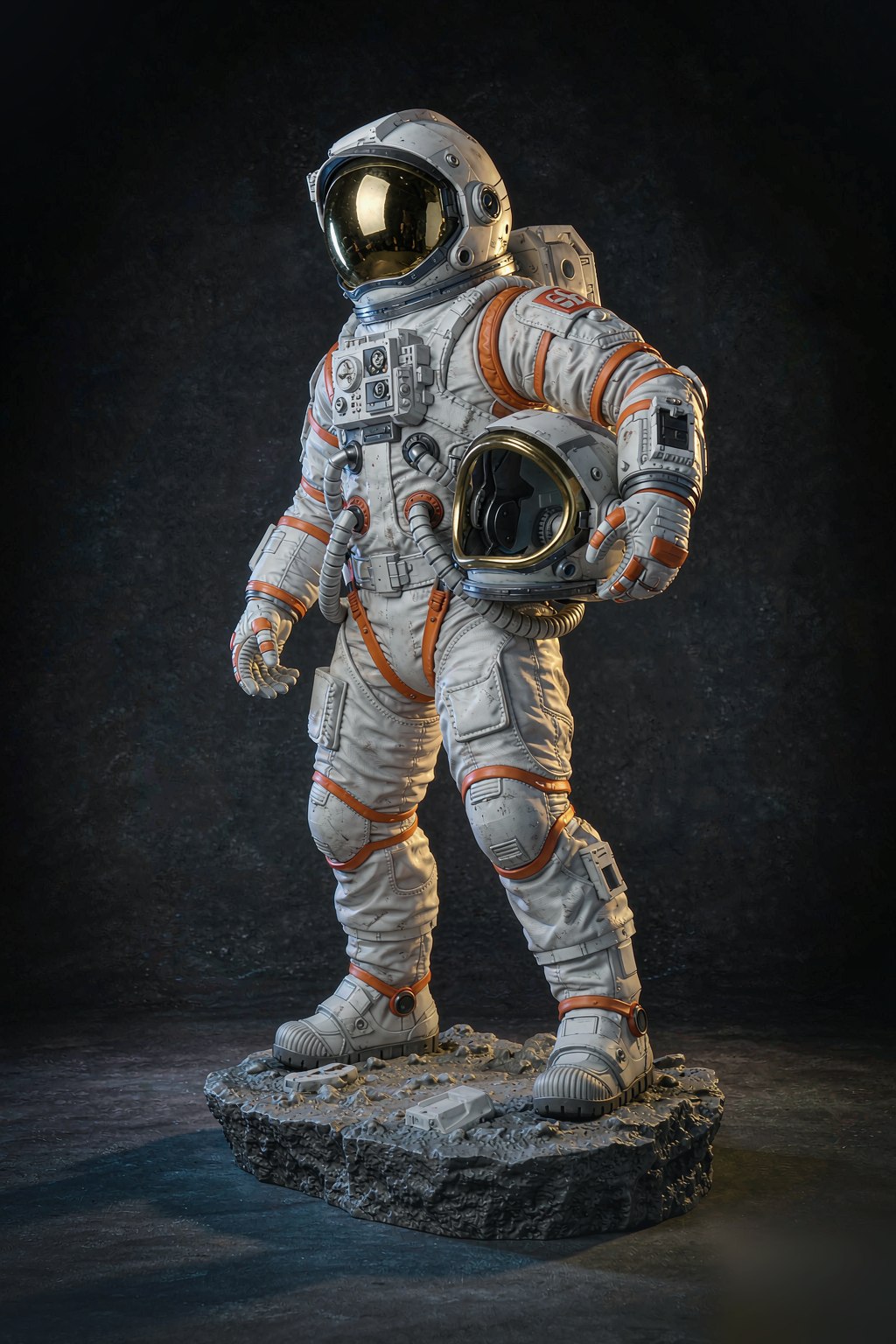
For licensed and original properties, the design itself is the asset. A character revealed before its street date is not an inconvenience — it is a commercial event, and it can be irreversible in a way that a manufacturing defect is not.
So the useful conversation is not "will you sign an NDA". Almost everyone will. The useful conversation is what happens on the day after the reference art arrives, because that is where exposure actually lives.
The NDA is a remedy, not a barrier
An NDA gives you a cause of action after something has gone wrong. It does not prevent the wrong thing from happening, and it does not tell you anything about how a manufacturer runs its floor.
Two practical consequences follow:
- Treat the NDA as necessary but not sufficient. It should exist before reference art moves, and it should be specific about the property, the term and the permitted uses.
- Everything an NDA cannot reach — who sees the file, where samples are kept, whether phones come out during a review — is controlled by operating procedure, not by contract language.
What an NDA should actually contain
Most template agreements do one thing: they stop a party from disclosing. That is the least interesting half of the problem, because a design can be lost without anyone disclosing anything at all.
Three obligations are worth insisting on, and they are normally contracted together:
- Non-disclosure — the obligation everyone means when they say "NDA"
- Non-use — the design may not be used for anything other than the project it was sent for. This is the clause that stops a supplier running a few extra units, or building the same form for someone else
- Non-circumvention — no approaching your customers, licensors or designers directly. A supplier with a sub-contracting network would otherwise be free to do exactly that
An agreement with non-disclosure and nothing else permits the most likely commercial loss.
Two further terms are worth fixing at signature rather than after an incident:
- Survival. Confidentiality obligations commonly run for a defined period after a project ends. Trade-secret obligations should be written as perpetual, and usually are — a sculpt does not stop being confidential because a term expired.
- A stated remedy. A confidentiality clause with no defined consequence is hard to enforce in proportion to the harm. Remedies are frequently expressed as an amount per unit or per batch rather than a single figure, which is both easier to apply and easier to defend.
The legal floor underneath the contract
We manufacture in China, so the framework that applies on our side is worth stating plainly — it decides whether a confidentiality clause has anything behind it.
China's Anti-Unfair Competition Law was revised on 27 June 2025 and the revised text took effect on 15 October 2025. It protects trade secrets, defined as information that is not publicly known, carries commercial value, and has been made the subject of confidentiality measures by the holder. In a serious case the available remedies include administrative penalties, civil damages that can be multiplied where infringement was wilful, and criminal liability.
The third element of that definition is the one to read twice. Protection rests on measures having actually been taken. A design that was never marked, never access-controlled and never recorded is difficult to describe as a trade secret at all, however obvious its commercial value — which is precisely why the operating controls below matter more than the signature.
This article describes how we handle pre-launch work. It is not legal advice, and the terms of your own agreement govern.
What we actually need, and what we do not
A frequent source of unnecessary exposure is sending more than the project requires. Our position is that a manufacturer should be able to quote and begin work from:
- the visual reference needed to understand the form
- scale, material intent and edition size
- any hard constraints on the design
We do not need the underlying production bible, marketing plans, or story material. If it is not needed to make the object, it should not need to leave your side. Reducing what you send is the most effective confidentiality measure available, and it costs nothing.
The controls that matter
The measures below are the ones that change outcomes, in rough order of effect.
Need-to-know, by stage. The set of people who see a design before it is public should be the people who must build or approve it — and it should be smaller in the concept stage than in production. Rights of access that never expire are the common failure, not initial oversharing.
No photography of client work. This is the control that most often breaks down, because it is cultural rather than technical. Our position is simple: client work is not photographed by us for any purpose. The works shown on this site are published with permission, and neither the client nor the property is named — not in the image, not in the filename, not in the alt text.
Physical handling. Tooling, masters and samples for an unreleased property are not left in shared areas, and reviews are conducted in controlled settings. If a design cannot be lost by accident, most of the remaining risk is deliberate — and deliberate risk is a much smaller category.
Controlled review files. Review material carries a visible mark identifying the recipient and the date. This does not stop a determined leak. It does make an uncontrolled copy attributable, which changes behaviour.
The pre-launch window. Where a property has a street date, the sensitive period is not the whole project — it is the window between when the design exists physically and when it becomes public. That window is when handling rules should be tightest, and it should be defined in advance rather than negotiated after the fact.
Numbering as a leak detector. An individually numbered edition has an underrated property: a piece that should not exist yet can be traced. Edition numbers map back to production batches and inspection records, so an early unit appearing in the wrong place is not a mystery, it is a lookup.
What an NDA cannot promise you
No manufacturer can promise zero risk, and a supplier who does should worry you. What you can reasonably ask for is a process you can audit: who has access, when that access ends, how material is marked, how samples are stored, and what happens if something goes wrong.
Ask for it in writing, and ask the same questions of everyone you shortlist. The answers are far more informative than the signature at the bottom of a template.
Questions worth asking any manufacturer
- Who inside your organisation will see our reference material, and at which stage does that access end?
- Do you photograph client work? Under what circumstances, and with whose permission?
- Where are tooling, masters and pre-production samples stored while a property is unreleased?
- How is review material marked, and can you tell us who received a given file?
- Can an individual unit be traced back to a production batch?
- If we discover a leak, what records can you produce, and within what time?
If the answer to question two is anything other than a clear policy, the rest of the answers matter less.
Our position
We work on unreleased properties as a normal part of the business, and we do not name clients or properties in public material — including in the caption, the filename or the metadata of any image we publish. Where a design is still pre-launch, we hold it back until it is not.
What we do not publish: the specifics of our process engineering. Production photography on this site is intentionally obscured. Those are the same policy, applied in two places.